
How Your Internet Habits Can Harm Animals
- Oct 18, 2023
- 3 min read
Viral photos and videos have more of an impact than you think.

The Problem with Viral Videos

As social media platforms like Instagram, TikTok, and YouTube continue to expand, so does the type of content in which they present. Viral videos of adorable cats, dogs, and wildlife of all kinds continue to be a main focus for social media engagement. As an animal lover, it's hard to imagine there are any negative implications to engaging with these pictures and videos.
However, the internet popularity associated with animal content can lead to alarming outcomes; fake rescue videos, crush videos, and exploitation of wildlife on the black market.
The Red Panda

Red pandas are extremely popular online for their cute and cuddly videos ad pictures. What is not shown in these videos, however, is the 50% decline in their populations over the last three generations, leaving only 2,500 left in the wild.
Despite protection efforts, smugglers still manage to capture with the intent to sell them on the black market. In January of 2018, six red pandas were rescued from smugglers in Laos, a country in Southeast Asia. Three of the pandas looked very ill, and died later on. The other three are living out their days on a sanctuary. It's difficult to prove whether or not this was a direct result of their increasing popularity online, however this wasn't the first incident like this to occur.
Sonya the Slow Loris

Years back, a video of Sonya went viral showing her supposedly raising her arms excitedly while being tickled. Animal expert explained that what looked like joy, was actually distress. As an overweight, nocturnal primate living in a flat in Russia, she was acting in defense against her owner, In fact, slow lorises are suffering more than ever because of the illegal wildlife trade, which stems from their role as desired pets and sources for traditional medicine.
The Illegal Wildlife Trade
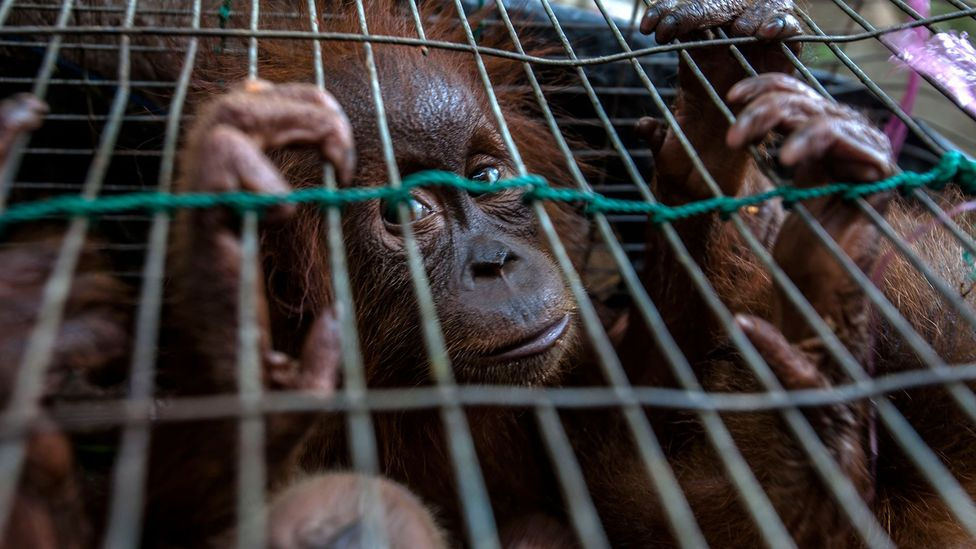
The global pet market is skyrocketing, making it exceptionally dangerous for wildlife. while some exotic pets are bred in captivity, others are snatched from the wild and often die during capture and transport. Wildlife trafficking has evolved to be more accessible than ever before. As social media and internet accessibility expands, so do all the black market operations. these platforms are so far underground that they're nearly impossible to monitor.
"The impulse to type 'I want one' below a shared video or photo is now just a few clicks away from direct involvement in wildlife trafficking." - Ella Davies for BBC Earth
Taking a Stand

In an effort to reduce wildlife trafficking, 20 of the largest technology companies in the world teamed up with WWF. In an effort to raise awareness, Instagram has implemented a pop-up warning with links to resources when users search for or use specific hashtags (e.g. #tigerselfie or #slowloris)
If we've learned anything in the past decade in which the internet has grown exponentially, it's that it can be just as damaging as it can useful. Similar to a game of telephone, the context of an image or video can be lost the more times it is shared. Always remain alert and vigilant. If something seems off, chances are it probably is. Reporting harmful content can be the difference between a species going extinct, and its rightful conservation.
Sources
Davies, E., Are your internet habits harming wildlife? BBC. studios. https://www.bbcearth.com/news/are-your-internet-habits-harming-wildlife
Hall, J., Red Pandas Rescued- Are These Animals the Next Black Market Pet? (2018). National Geographic. https://www.nationalgeographic.com/animals/article/wildlife-watch-red-pandas-laos-pet-trade


Comments