
The Truth About: SeaWorld
- Oct 18, 2023
- 3 min read

SeaWorld is a US theme park owned by SeaWorld Parks & Entertainment with its headquarters in Orlando, FL. For decades, it has faced backlash for its treatment of marine life. They provide many events and attractions such as animal performances, and even human interactions with the wildlife. The corporation claims to have a “commitment to animal rescue, rehabilitation, and return.”
Animals in Captivity
Orca whales, dolphins, and sea lions are highly intelligent, social mammals that have played a large role in the entertainment industry at SeaWorld. Over the years, it has become increasingly clear that they do not thrive in captivity.
There is a distinct difference between rescue and rehabilitation, and kidnapping, breeding and life trapped inside of a tank.
The Wild vs Captivity
It has been recorded that orcas can dive to over 3000 ft in the ocean, and remain at an average of 100-500 ft daily.
On January 6th 2017, Tilikum "Tilly", a captive orca, died in a 22 ft tank. Today, SeaWorld's tanks are about 36 ft deep.
In the wild, dolphins swim more than 40 miles a day; participating in emotional, mental, and social stimulation.

In captivity, they're forced to swim in endless circles and are frequently placed in tanks with others that they may not get along with - often leading to aggressive abuse.
Orcas have an average life span of about 50 years, but records show ages of even 80 and 90.
Only a handful have lived passed 30 years in captivity, but no captive-born orca has yet.
The Wild vs Captivity: Collapsed Dorsal Fins
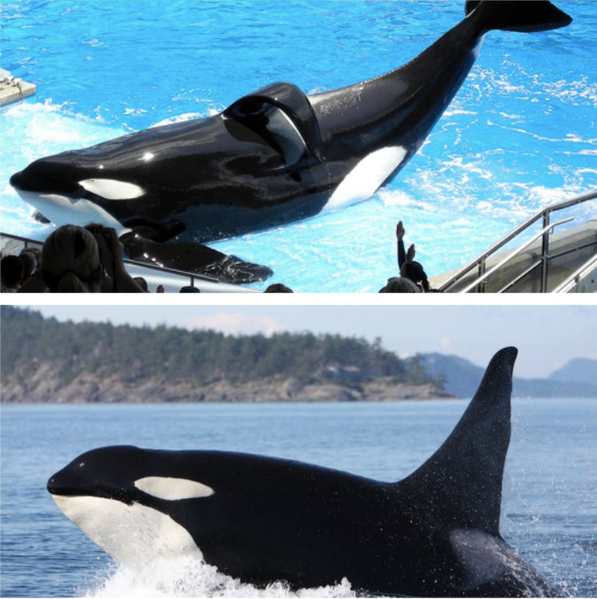
There are many hypotheses as to why orcas can exhibit collapsed dorsal fins. While more research needs to be done, it is believed to be the result of many variables such as stress, malnutrition, injury, and age. This loss of integrity is not limited to only whales in captivity, but it is expressed at a very high rate amongst them.
LOVE DOLPHINS, WHALES, AND SEA LIONS? STOP PAYING TO SEE THEM PUT ON A SHOW.

"In 2013, the documentary film 'Blackfish' laid bare the psychological toll of captivity, through the story of a wild-caught orca named Tilikum who had killed two trainers at SeaWorld Orlando. The film included testimony from former SeaWorld trainers and cetacean specialists, who argued that Tilikum’s stress directly led to his aggression towards humans."
- National Geographic
Maybe Not All Bad?
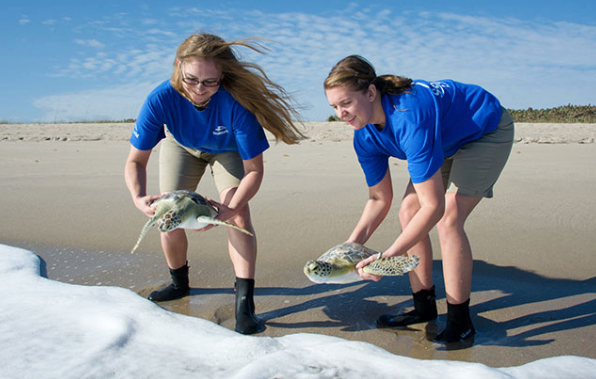
As of 2016, SeaWorld moved to no longer breed orcas in captivity. Because they have outright acknowledged captive breeding isn't right, they could be setting an example for other companies.
They‘ve pledged to spend $50 million from 2016-2021 to expand their rescue and rehabilitation efforts.
They do provide awareness for the danger to marine life and education on many species.
Their website says they have rescued over 38,000 animals.
Our Conclusion
Despite those points, their history of exploitation, abuse, and direct disregard for the needs of these wild animals is enough to convince anybody of their inhumanity.
Keep in mind: it's not just whales, dolphins, and sea lions that experience neglect. It's also sharks, polar bears, manatees, penguins, and more.
The fact that SeaWorld acknowledges themselves as a “theme park and entertainment company” instead of anything close to including the words “organization” or “rescue” is automatically a red flag (at least for me) - especially since a highlight on their website is their “commitment” to animal welfare. It is also worth noting that their website is www.SeaWorldEntertainment.com... key words are 'entertainment' and the absence of '.org'.
Rescue, rehabilitation, and release is an excellent method for aiding the lives who called this planet home before humans did. Treating them as pawns and puppets for monetary gain is the highest form of disrespect to such incredible creatures that have been on Earth for millions of years.
Sources
Alves, F et al. “The incidence of bent dorsal fins in free-ranging cetaceans.” Journal of anatomy vol. 232,2 (2018): 263-269. doi:10.1111/joa.12729
Daly, N. (2019, March 25). Orcas don't do well in captivity. Here's why. National Geographic. https://www.nationalgeographic.com/animals/article/orcas-captivity-welfare.
Is SeaWorld Bad? (2020, January 27). SeaWorld of Hurt. https://www.seaworldofhurt.com/features/is-seaworld-bad-animal-abuse-cruelty-facts/
National Geographic. (n.d.). Orcas: Killer whales are the larges dolphin species. https://www.nationalgeographic.com/animals/mammals/facts/orca.
The Humane Society. (2016, May 1). Big Changes at SeaWorld. The Humane Society of the United States. https://www.humanesociety.org/.
Reminder: absolute care was taken in creating this post, but seeking out other credible sources and exercising good judgment is always encouraged.


Comments